I'll start tomorrow was my loop: How a tiny check-in habit changed everything
We’ve all been there—full of motivation one night, writing grand plans, only to abandon them by day three. I used to say *“I’ll start tomorrow”* like it was a promise, not a delay tactic. Then I found a simple app that didn’t ask for hours of effort, just one quick daily check-in. That tiny moment rewired my habits, not by pushing harder, but by making everything smaller, clearer, and doable. This isn’t about hustle—it’s about working *with* your real life. And if you’ve ever felt stuck between wanting to grow and not knowing where to start, this might be the gentle shift you’ve been waiting for.
The Breaking Point: When Motivation Fails and Excuses Win
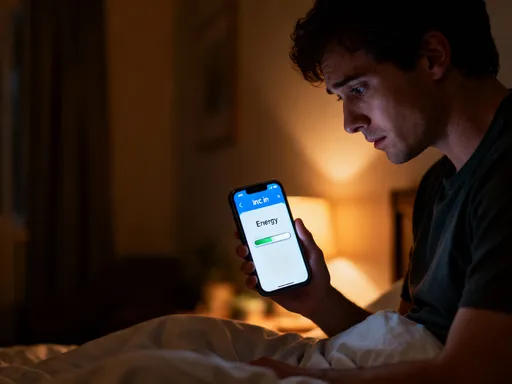
It was 9:47 p.m., and I was sitting on the edge of my bed, phone in hand, staring at a to-do list that hadn’t changed in three days. “Learn basic French,” “Walk 30 minutes,” “Call Mom,” “Start journaling”—all noble intentions, all untouched. My heart wanted to do better. My mind kept saying, *tomorrow*. But tomorrow never came. Instead, guilt did. It settled in quietly, like dust on a shelf you keep meaning to clean.
I wasn’t lazy. I was overwhelmed. And that’s the thing we don’t talk about enough: most of us aren’t failing because we lack discipline. We’re failing because we’re trying to climb a mountain in one step. We set big goals with big energy—inspired by a podcast, a friend’s post, or a quiet moment of self-reflection—and then we expect that spark to carry us for weeks. But motivation is like a phone battery. It drains. And when it’s gone, we’re left with nothing but silence and a screen that won’t turn on.
What finally changed wasn’t a new goal. It was a realization: I didn’t need more willpower. I needed a better system. One that didn’t rely on how I felt, but on what I did—no matter how small. I wasn’t looking for transformation. I was looking for a way to show up, even when I didn’t feel like it. And that’s when I discovered the power of the daily check-in.
The Hidden Power of the Daily Check-In
The first time I used the app, I thought, *This can’t possibly work*. All it asked was one question: *Did you do it today?* No timer, no checklist, no performance review. Just a single tap—yes or no. That was it. No fanfare. No pressure. And yet, something shifted.
Here’s the truth: we often think change comes from big actions. We imagine dramatic turnarounds—waking up at 5 a.m., crushing a workout, meditating for an hour, writing a novel in six weeks. But real change, the kind that lasts, usually starts much smaller. It starts with showing up. The daily check-in isn’t about measuring progress. It’s about building presence. It’s the digital version of brushing your teeth—something so small it feels almost automatic, but so consistent it shapes your days.
Psychologists call this “habit stacking” or “implementation intention,” but I don’t need those words to understand it. I just know that when I answer that one question every night—*Did I do it?*—I’m not just tracking a behavior. I’m reinforcing a promise to myself. And over time, that tiny moment of reflection builds self-trust. It’s not about perfection. It’s about continuity. It’s about saying, *I was here today*, even if all I did was open the app for two minutes or take three deep breaths.
And here’s the beautiful part: the app doesn’t scold me when I say no. It doesn’t send red alerts or guilt-tripping messages. It just records it. Calmly. Neutrally. Like a friend who sees you skip the gym but still smiles when you walk in the next day. That lack of judgment made all the difference. Because suddenly, missing a day wasn’t failure. It was data. And data can teach you something.
How Task Simplification Unlocks Lasting Change
Before the check-in, I used to set goals like “exercise more” or “eat healthier.” Vague, right? And that vagueness was the problem. When a goal is too big or too fuzzy, your brain doesn’t know where to start. So it doesn’t. Instead, it freezes. Or worse—it makes up excuses. *I don’t have time. I’m too tired. I’ll do it later.*
What changed was simplification. I stopped saying “exercise more” and started saying “put on my walking shoes.” That’s it. One action. Tiny. Specific. Doable. And the app let me track that exact thing. I didn’t have to walk. I just had to put on the shoes. But here’s what happened: nine times out of ten, once the shoes were on, I ended up walking. Because starting is the hardest part. And once you start, momentum does the rest.
This is where technology becomes a quiet ally. A good habit app doesn’t demand performance. It lowers the bar. It lets you define what “doing it” means—on your terms. For me, “learning Spanish” became “open Duolingo for 60 seconds.” “Meditating” became “sit still and breathe five times.” These aren’t grand achievements. But they’re consistent. And consistency builds identity. After a few weeks, I stopped thinking, *I should meditate*. I started thinking, *I’m someone who meditates*—even if it’s just for a minute.
The app supports this with smart design. It uses gentle nudges, not alarms. A soft chime at 8 p.m. says, *Time to check in*. No urgency. No stress. Just a reminder, like a Post-it note on the fridge. And the interface is clean—no clutter, no flashing badges, no pressure to “level up.” It feels calm. Intentional. Like a space where growth can happen without noise.
Choosing the Right App: Less Noise, More Support
Not all apps are created equal. I tried a few before finding the one that worked. Some were too flashy, with points, leaderboards, and daily challenges. They felt like games—not tools for real life. Others were too rigid, demanding exact times, durations, and checklists. They made me feel like I was being monitored, not supported.
What I needed—and what I think most of us need—was something simple, private, and kind. An app that feels like a quiet companion, not a drill sergeant. The one I kept using had three key qualities: simplicity, emotional design, and flexibility.
Simplicity meant I could track anything—drinking water, calling a friend, writing down one good thing—without setting up complex rules. Emotional design meant the colors were soft, the tone was warm, and the feedback was encouraging. When I said “yes,” it didn’t shout “CONGRATULATIONS!” It said, “Nice. You showed up.” That subtle difference mattered. It felt human.
Flexibility was crucial. Life isn’t predictable. Some days I meditated at 7 a.m. Some days I didn’t get to it until bedtime. The app didn’t punish me for that. It let me check in whenever I remembered. And it allowed me to adjust my goals—lowering the bar when I was sick, raising it when I felt strong. It adapted to me, not the other way around.
If you’re looking for an app, ask yourself: does it feel like a friend or a boss? Does it make you want to hide your slip-ups, or does it make it safe to say, “I didn’t do it today”? The right tool won’t shame you. It will help you see patterns—like how you’re more likely to walk on sunny mornings, or how journaling helps you sleep better. It becomes a mirror, not a judge.
Building the Habit Loop: From One Tap to Daily Rhythm
Habits don’t form in a day. They form through repetition. And the easiest way to repeat something is to tie it to something you already do. That’s called habit stacking—linking a new behavior to an existing one.
For me, the check-in became part of my bedtime routine. After I brushed my teeth and before I turned off the light, I opened the app. Just one tap. *Did I do it today?* Yes or no. That consistency—same time, same place—made it automatic. After a few weeks, I didn’t have to remember. My body remembered for me.
But it wasn’t always smooth. There were days I forgot. Days I was too tired. Days I didn’t want to face the question. And that’s okay. The app didn’t break. The habit didn’t break. Because the goal wasn’t perfection. It was awareness. Every time I checked in—even with a “no”—I was reinforcing the habit of showing up for myself.
And here’s what surprised me: the streaks. I didn’t start tracking them on purpose, but the app showed a little number—how many days in a row I’d checked in. At first, it was just a curiosity. But after ten days, I noticed I didn’t want to lose it. Not because I was chasing a number, but because I didn’t want to break the rhythm. It wasn’t about the streak. It was about the rhythm—the quiet, steady beat of showing up, day after day.
That rhythm started to shape my identity. I wasn’t just *trying* to build habits. I was becoming someone who built them. And that shift—from effort to identity—was everything.
Beyond Productivity: How Tiny Habits Nourish Growth
This practice didn’t just change my habits. It changed how I felt about myself. I started to trust myself more. When I said I’d do something—even something small—I followed through. That trust spilled over into other areas. I became more reliable with my family. I showed up for my commitments. I stopped making promises I couldn’t keep.
It also reduced my anxiety. Before, I used to worry about falling behind—on goals, on life, on everything. Now, I know that even if I miss a day, I can check in the next day. There’s no penalty. No reset button. Just a gentle return. That freedom made me less stressed, more present, more patient—with myself and with others.
And I started to reflect more. The nightly check-in became a moment of pause. Instead of scrolling mindlessly before bed, I took a breath and asked myself: *How did today go? What mattered?* That tiny habit created space for gratitude, for insight, for growth. I began to notice patterns—like how I felt calmer after walking, or how writing down one good thing helped me sleep.
Over time, this small practice rippled outward. I had more energy. I was more focused. I felt more in control—not because I was doing more, but because I was doing *something*, consistently. And that consistency gave me confidence. I realized I didn’t need to overhaul my life. I just needed to show up, one small yes at a time.
Your Turn: Start Small, Stay Connected, Grow Steady
If you’ve ever said, *I’ll start tomorrow*, I want you to know something: you’re not broken. You’re human. And you don’t need more motivation. You need a simpler way to begin.
So here’s my invitation: pick one tiny thing. One small action that aligns with who you want to be. Maybe it’s drinking a glass of water when you wake up. Maybe it’s stretching for two minutes. Maybe it’s writing down one thought before bed. Define it. Make it so small it feels almost too easy.
Then, find a way to check in—daily. It doesn’t have to be an app. It could be a notebook, a calendar, a sticky note. The tool doesn’t matter as much as the rhythm. The goal isn’t to finish fast. It’s to continue gently. To build a habit of showing up—for yourself, for your dreams, for your days.
Because here’s the truth: growth isn’t loud. It’s quiet. It’s not about dramatic changes. It’s about small, consistent choices. And each time you say *yes*—even in the smallest way—you’re building a life that reflects who you really are.
So don’t wait for tomorrow. Start today. Just one tap. One breath. One moment of presence. That’s where it begins. Not with a bang, but with a whisper. And over time, that whisper becomes a voice—one that says, *I’m here. I’m growing. I’m becoming.*