We all said ‘I’ll relax later’—until this app made calm part of our hangouts
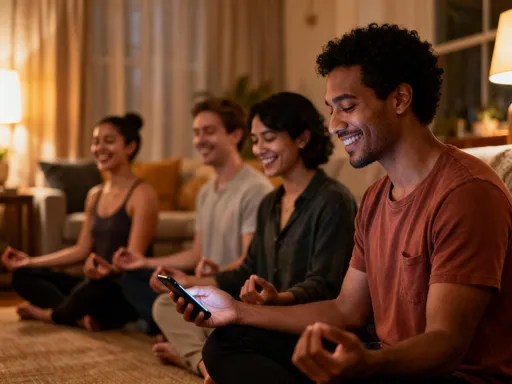
Ever found yourself and your friends scrolling in silence, feeling wired but lonely? We used to gather just to vent about stress—until one of us brought up a simple meditation app. It didn’t replace our chats, but it deepened them. Now, we press play together, breathe in sync, and actually feel present. This isn’t about solo mindfulness—it’s about sharing calm like we share coffee. And honestly, it’s changed how we connect. What started as a quiet experiment has become the heart of our time together—a shared pause that brings us back to each other, and to ourselves.
The Quiet Crisis in Our Friend Circles
Remember those weekend get-togethers where everyone shows up smiling, but something feels… off? We sit around the table with wine and snacks, laughing at old memories, yet underneath, there’s a hum of tension. Someone’s distracted by a work email. Another keeps checking the time, mentally rehearsing tomorrow’s to-do list. We talk, but we’re not really listening. We’re together, but not quite present. It’s not that we don’t care—we do, deeply. But modern life has trained us to carry our stress like a second shadow, even in the company of people we love.
I used to think this was just how adult friendships were supposed to feel—well-meaning but scattered. We’d meet to escape our routines, only to spend the whole evening replaying them. “How was your week?” would turn into a 20-minute download of frustrations: the never-ending inbox, the kids’ schedules, the laundry pile that never shrinks. And while venting helped a little, it often left us more drained than when we arrived. We weren’t recharging—we were passing around our exhaustion like a shared dish at dinner.
Then one night, my friend Maya looked around the table and said, “Do you ever feel like we’re all just… running on fumes?” We laughed, but it stung because it was true. We weren’t connecting—we were surviving. And in that moment, I realized something important: we weren’t lacking time with each other. We were lacking presence. We needed a way to slow down, not just physically, but emotionally and mentally. We needed to come back into our bodies, into the room, into the moment. What we didn’t know yet was that the tool to help us do that was already in our pockets.
How Meditation Apps Found Their Way Into Our Group Rituals
The shift started on a rainy Saturday afternoon. We’d planned a cozy brunch at my place—just five of us, the usual crew. The rain tapped softly against the windows, and the smell of cinnamon toast filled the kitchen. But even in that warm setting, the energy was restless. Sarah was stressed about her son’s school project, Jen was still replaying a tense conversation with her sister, and I couldn’t stop thinking about a deadline I’d missed. The usual venting had already begun, and I could feel the room tipping toward heaviness.
Then Maya reached into her bag and said, “Can we try something before we dive into the drama?” She pulled out her phone and opened a meditation app. Not music. Not a playlist. A guided breathing session. I’ll admit, my first thought was, Oh great, now we’re doing yoga in sweatpants. But Maya just smiled and said, “It’s ten minutes. Worst case, we waste a song’s worth of time. Best case, we actually feel better.”
We agreed, more out of curiosity than belief. She played a short session—just breathing together, focusing on the rise and fall of our chests, guided by a calm voice that didn’t feel preachy or mystical. At first, I kept sneaking glances around the room, half-expecting someone to laugh. But as the minutes passed, something shifted. The silence wasn’t awkward anymore. It felt full. When the session ended, no one rushed to speak. We just sat for a moment, sipping our tea, looking out at the rain. And then, almost without planning, the conversation changed. It wasn’t about problems anymore. It was about how the light looked on the wet leaves, or how good the toast tasted, or how nice it felt to just… be.
That was the beginning. What started as a one-time experiment became a regular part of our hangouts. We didn’t replace our talks—we made space for stillness before them. And in that space, we found a new kind of closeness. It wasn’t about sharing more words. It was about sharing the quiet. The app didn’t fix our lives, but it gave us a way to show up for each other—calmer, clearer, and more connected.
Why Calm Is the New Common Ground
Let’s be honest—agreeing on anything as a group can be a challenge. What movie to watch? Where to eat? Even something as simple as choosing a playlist can turn into a negotiation. But here’s what’s beautiful: no one argues about wanting to feel better. In a world where opinions are loud and differences are highlighted, the desire to feel calm, grounded, and safe is something we all share. It’s neutral. It’s kind. It’s human.
That’s why meditation has become our new common ground. We don’t have to agree on politics, parenting styles, or the best way to fold a fitted sheet. We just have to agree to pause. To breathe. To be together without agenda. And in that simple act, something powerful happens. We stop performing. We stop trying to impress or fix or explain. We just… exist, side by side, in the same moment.
There’s a quiet intimacy in sharing stillness. It’s different from talking, different from laughing, different from even hugging. It’s the intimacy of mutual care—of saying, without words, I see you. I’m here. Let’s just be okay for a few minutes. And because it’s not about speaking, it’s inclusive. The quiet friend doesn’t have to force herself to talk. The overwhelmed mom doesn’t have to pretend she’s holding it all together. We all get to just be as we are.
Over time, I’ve noticed that these shared pauses have rebuilt a sense of emotional safety in our group. We listen better now. We’re more patient. We don’t jump to solutions as quickly—we let each other feel first. And when someone shares something hard, the space we’ve created together makes it easier to hold that pain without fixing it. Calm, it turns out, is contagious. And when we share it, we’re not just relaxing—we’re rebuilding trust, one breath at a time.
From “I’ll Try It Later” to “Let’s Do It Now”
We’ve all been there—standing in the self-help aisle, flipping through a book on mindfulness, thinking, This looks good. I’ll start next week. Or watching a wellness video and promising ourselves, Tomorrow. I’ll meditate tomorrow. But tomorrow comes, and so does the laundry, the emails, the school pickup, the dinner prep. And just like that, “later” becomes never.
The truth is, self-care often feels like one more task on a never-ending list. It’s something we know we should do, but it’s hard to prioritize when life feels urgent. Meditation, in particular, can seem like a luxury—something for people with time, peace, and perfect quiet. But what if it didn’t have to be solo? What if it wasn’t about discipline, but about connection?
That’s the magic of turning meditation into a group habit. Suddenly, it’s not another chore. It’s something we look forward to. It’s part of the fun. When my friend texts, “Girls’ night—wine, snacks, and a 10-minute reset?” I say yes without thinking. Because it’s not just about the meditation. It’s about the whole experience—the laughter, the comfort, the knowing that we’re doing something kind for ourselves, together.
There’s also something powerful about peer energy. When one of us is tired or resistant, the others gently pull her in. “Come on, it’s just ten minutes. You’ll feel better.” And she does. Not because the app is magic, but because we’re doing it as a team. We’re not holding ourselves to some impossible standard of perfect stillness. We’re just showing up, breathing together, and giving ourselves permission to pause. And over time, that consistency builds not just calm, but confidence. We start to believe that we can take care of ourselves—that we deserve to.
Choosing the Right App for Shared Moments
Not every meditation app works well in a group setting. Some feel too clinical, with voices that sound like they’re reading a medical report. Others are packed with features that make them confusing to navigate when you’re trying to start a session with friends. What we’ve learned is that the best apps for shared moments are the ones that feel warm, simple, and welcoming.
First, the voice matters. We want something that sounds like a kind friend, not a robot or a guru. The tone should be gentle, not pushy. It shouldn’t make you feel guilty for being distracted. It should guide, not command. We also look for apps with short, accessible sessions—five to ten minutes is ideal. Long enough to settle in, short enough to fit into a hangout without feeling like a commitment.
Sound quality is another big factor. We usually play the session through a speaker, so we need clear audio that fills the room without echoing. We’ve learned to test the volume beforehand—no one wants to be startled by a suddenly loud chime. Ambient background sounds, like soft rain or distant waves, can enhance the experience, but they shouldn’t overpower the voice.
Themes matter too. Some nights, we want a session focused on releasing stress. Other times, we choose one about gratitude or self-compassion. The best apps offer a variety of options without overwhelming us. And importantly, they don’t require a lot of setup. We’re not tech experts—we just want to press play and breathe. The simpler the interface, the more likely we are to actually use it. It’s not about having the most features. It’s about having the right ones for the moment.
Making It a Ritual, Not a Task
The biggest shift in our group wasn’t just starting meditation—it was how we started doing it. At first, we treated it like an activity: “Okay, everyone, time for our mindfulness break.” It felt a little forced, like we were checking a box. But over time, we learned to weave it into the rhythm of our time together—naturally, effortlessly.
Now, it’s just part of the flow. We do it after we’ve eaten but before we clean up—when we’re relaxed and don’t want to rush off. Or we use it as a reset between games, when the energy gets too loud. Sometimes, we even do it before dessert, like a palate cleanser for the mind. It’s not a separate event. It’s a pause, a breath, a way to reset and reconnect.
We’ve also stopped calling it “meditation” when we invite each other. That word can feel heavy, like it requires special clothes or a quiet room or perfect focus. Instead, we say things like, “Let’s just breathe together for a few minutes,” or “Want to do a quick reset?” It feels lighter. More doable. More like something we get to do, not something we have to do.
And here’s the thing—we don’t do it every time. Some nights, we just want to laugh and talk and eat too much cheese. And that’s okay. The ritual only works because it’s not forced. It’s an option, a gift we give ourselves when we need it. And because it feels good—not like a chore, but like a treat—we keep coming back to it. It’s not about perfection. It’s about presence. And presence, when shared, becomes a kind of joy.
The Ripple Effect: Calmer Minds, Stronger Bonds
If you’d told me a year ago that a ten-minute breathing session would change my friendships, I’d have laughed. But here’s what’s happened: we listen better now. When someone shares something hard, the rest of us don’t jump in with advice. We pause. We breathe. We let the words land. And in that space, we respond with more empathy, more patience, more love.
It’s not just about the moments we meditate together. It’s about how those moments change the rest of our time. We’re less reactive. We’re more present. We notice small things—the way a friend smiles when she talks about her garden, or how someone’s voice softens when she talks about her mom. We’re not just hearing each other. We’re seeing each other.
And the benefits don’t stop when we go home. I’ve started using the same breathing techniques when I’m overwhelmed at work, or when my kids are melting down before school. I don’t always have the app open, but I have the memory of those shared breaths—the feeling of being held, even in silence. It’s become a kind of inner anchor, a reminder that calm is possible, even in chaos.
Most importantly, we’ve rediscovered the joy of simply being together. Not doing, not fixing, not performing. Just being. In a world that never stops moving, that might be the most radical act of care we can offer each other. So if you’ve ever sat in a room full of friends and still felt alone, I want to invite you: try this. Gather your people. Press play. Breathe together. You don’t need perfect conditions. You don’t need to be an expert. You just need to be willing to pause, together. Because sometimes, the deepest connection isn’t in the words we share—but in the silence we create.