Chasing Light and Tradition: Gyeongju’s Festivals Through My Lens
Have you ever seen a moment so vivid it feels like history blinked? In Gyeongju, South Korea, ancient whispers meet golden-hour glow, especially during its vibrant festivals. As a photographer, I didn’t just capture images—I lived them. From lantern-lit processions to dancers in centuries-old costumes, every frame told a story. This is more than travel; it’s visual storytelling at its most soulful. Nestled in the southeastern corner of the Korean Peninsula, Gyeongju offers a rare window into a civilization that shaped a nation. Once the capital of the Silla Kingdom, which ruled for nearly a millennium, the city breathes history without fanfare. Its cobblestone paths, temple ruins, and moss-covered stone pagodas stand not behind glass but as part of daily life. And when festival season arrives, this living museum transforms into a dynamic stage where tradition dances in the light, inviting those with cameras—and hearts—to witness something timeless.
Where Ancient Korea Comes Alive
Gyeongju is often called the “museum without walls,” and for good reason. With over a thousand years as the capital of the Silla Dynasty (57 BCE–935 CE), it holds an unmatched concentration of cultural heritage. UNESCO has designated much of the city as a World Heritage site, recognizing its tumuli parks, temple complexes, and astronomical observatories. But unlike static museums, Gyeongju’s history is not frozen—it pulses through seasonal festivals that revive ancient rituals with reverence and joy. These events are not performances for tourists; they are community-led expressions of identity, faith, and continuity. For a photographer, this means access to authentic moments—unrehearsed glances, spontaneous gestures, and ceremonial precision—that cannot be replicated elsewhere. The city’s blend of natural beauty and cultural depth creates a unique canvas. Whether it’s the soft pink haze of cherry blossoms framing a 1,300-year-old pond or the warm flicker of candlelight illuminating a monk’s robe, Gyeongju’s festivals offer visual poetry rooted in centuries of tradition.
What makes Gyeongju truly exceptional is how seamlessly the past integrates with the present. Locals walk past royal tombs on their way to market. Children play near stone guardians that once stood watch over kings. During festivals, this coexistence becomes even more pronounced. Ancient rites are not reenactments but living practices, observed with care and pride. The atmosphere is one of quiet celebration—never forced, never theatrical. This authenticity is what draws photographers from around the world. There is no need to stage a scene when reality offers such rich, unfiltered moments. Every alley, temple courtyard, and riverside park becomes a potential backdrop for images that speak of heritage, continuity, and the quiet dignity of a culture that honors its roots.
The Magic of Gyeongju’s Festival Calendar
Gyeongju’s festival calendar is carefully aligned with nature, history, and spiritual tradition, offering photographers a year-round rhythm of visual opportunities. Each event carries its own symbolism and aesthetic, from the fleeting beauty of spring blossoms to the meditative glow of autumn lanterns. The Gyeongju Cherry Blossom Festival, held each April, marks the awakening of the city after winter. Along the 2-kilometer stretch of Bomun Lake and the historic Poseokjeong Pavilion, thousands of cherry trees burst into bloom, creating a dreamlike tunnel of pale pink. Families gather for picnics, children release paper wishes into the wind, and traditional musicians perform beneath the boughs. For photographers, this festival offers soft, diffused light and gentle movement—ideal for portraits, candid moments, and nature-infused compositions.
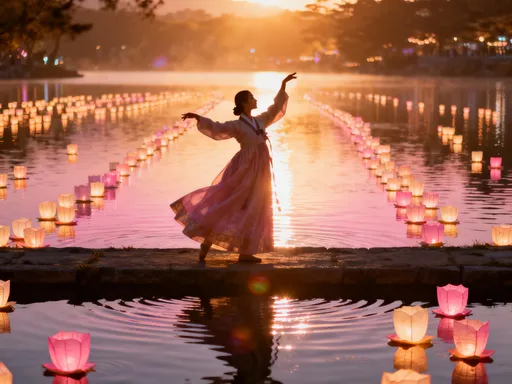
Equally compelling is the Gyeongju Hwangnyongsa Temple Lantern Festival, held each spring and autumn in honor of Buddha’s birthday. Though the original Hwangnyongsa Temple was destroyed centuries ago, the festival revives its spirit through thousands of handcrafted lanterns that illuminate the reconstructed grounds and nearby Anapji Pond. The lanterns—shaped like lotuses, dragons, and celestial beings—float on water or hang from trees, casting a warm, ethereal glow. The procession of monks and laypeople carrying lanterns through the city streets is a particularly powerful subject. The interplay of firelight and shadow, the stillness of water reflecting color, and the solemn expressions of participants create a deeply spiritual atmosphere, perfect for capturing emotion and atmosphere.
Other notable events include the Silla Cultural Festival in October, which celebrates the art, music, and martial traditions of the ancient kingdom. Reenactments of royal court dances, archery demonstrations, and traditional craft markets offer dynamic scenes for action shots and cultural detail. The Gyeongju Historic Areas Lighting Festival, held in winter, transforms key monuments with subtle illumination, allowing for long-exposure photography of ancient structures bathed in soft light. Each festival is rooted in meaning—seasonal change, religious observance, or historical remembrance—giving photographers not just beautiful images, but stories with depth and context.
Why Festival Photography in Gyeongju Stands Out
Photographing festivals in Gyeongju is distinct from capturing events in more commercialized destinations. There is no sense of performance for the sake of spectacle. The rituals are not adapted for tourist consumption but observed with sincerity and care. This authenticity translates into images that feel intimate and truthful. In many parts of the world, cultural festivals have become highly choreographed, with performers aware of cameras and adjusting their expressions accordingly. In Gyeongju, the opposite is often true. People are absorbed in the moment—lighting lanterns, folding prayer papers, or bowing in quiet reverence. These unguarded expressions are what make for compelling photography.
Consider the image of an elderly woman placing a candle inside a lotus lantern. Her hands, weathered by time, move with deliberate grace. Her eyes are downcast, focused on the task, unaware of the lens. This is not a posed moment but a private act made public through celebration. Such scenes are common in Gyeongju, where participation is intergenerational and deeply felt. Children learn rituals from grandparents, and entire families walk together in processions. A young boy in a traditional hanbok holding his mother’s hand while gazing at a floating lantern—these are the moments that define the festival experience and create enduring photographs.
The lack of commercialization also means fewer distractions. There are no loudspeakers blaring pop music, no flashy advertisements, no staged photo zones. Instead, the focus remains on the ritual itself. This allows photographers to concentrate on composition, light, and emotion without visual clutter. The simplicity of the settings—the stone paths, wooden temples, and natural landscapes—enhances the clarity of each image. What stands out is not the spectacle, but the sincerity. And in photography, sincerity is often more powerful than spectacle.
Lighting, Angles, and Timing: Capturing the Unseen
To photograph Gyeongju’s festivals effectively, one must master the interplay of light, movement, and timing. The golden hour—shortly after sunrise and before sunset—is especially magical. At Anapji Pond, morning light reflects off the still water, doubling the image of lanterns, willows, and temple eaves. A low angle, shooting from the edge of the pond, can create a mirror effect that adds depth and symmetry to the composition. Using a polarizing filter can enhance reflections while reducing glare, particularly useful on sunny days.
During evening events, such as the lantern procession, low-light conditions require careful camera settings. A wide aperture (f/2.8 or lower) allows more light to enter, enabling sharper images without excessive flash, which can disrupt the mood and offend participants. A shutter speed of 1/60th of a second or faster helps freeze motion, especially when photographing dancers or children walking with candles. For ambient shots—crowds bathed in lantern glow—a slightly slower shutter (1/30th) can convey movement and atmosphere, though a tripod or stabilized lens is recommended to avoid blur. ISO settings between 800 and 3200 are typically sufficient in these conditions, balancing sensitivity with image noise.
Choosing the right lens is equally important. A 24-70mm zoom offers versatility for both wide scenes and tighter portraits. A 70-200mm telephoto lens allows for candid shots from a respectful distance, preserving the dignity of private moments. For macro details—a single petal on a lotus lantern, the texture of an embroidered robe—a 100mm macro lens can reveal the intricate craftsmanship often overlooked. The key is to remain mobile and observant, anticipating moments rather than chasing them. Some of the best images come from waiting—watching a family prepare their offering, or a monk adjust his robe before a ceremony. Patience, more than equipment, is the photographer’s greatest tool.
Navigating the City: From Temple Grounds to Hidden Alleys
For photographers, Gyeongju is best explored on foot, with strategic use of public transportation. The city is compact and well-connected by buses, but the heart of the festival experience lies in its walkable historic districts. A recommended itinerary begins at Bulguksa Temple, a UNESCO World Heritage site and one of Korea’s most revered Buddhist temples. During festival season, the temple grounds are alive with prayer flags, incense smoke, and visitors bowing before golden statues. Early morning visits offer quieter conditions and soft light filtering through pine trees. The stone bridges and staircases provide strong leading lines for architectural photography.
From Bulguksa, a short bus ride leads to Seokguram Grotto, perched on a hillside with panoramic views of the East Sea. While the interior is restricted, the surrounding paths offer dramatic landscape shots, especially at sunrise. Returning to central Gyeongju, the Tumuli Park—home to dozens of ancient burial mounds—becomes a focal point during the Silla Cultural Festival. Costumed performers reenact court scenes on the grassy knolls, creating a surreal blend of past and present. Nearby, the Cheomseongdae Observatory, the oldest surviving astronomical structure in East Asia, is beautifully lit during the winter festival, ideal for long-exposure night photography.
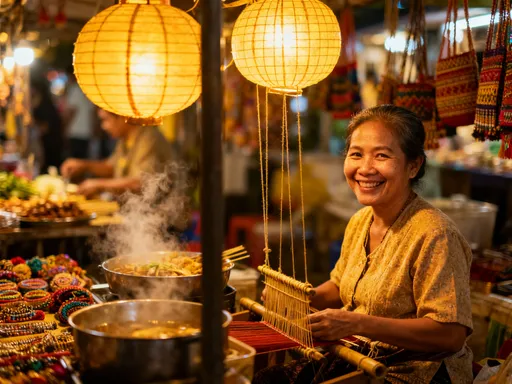
The city’s traditional markets, such as the Gyeongju Namgang Market, offer another layer of visual richness. Vendors sell honey bread (yeot), persimmon cakes, and hand-carved souvenirs. The colors of dried fruits, woven baskets, and stacked pottery create natural still-life compositions. During festivals, these markets often host craft demonstrations—pottery, paper-making, embroidery—providing opportunities for close-up shots of skilled hands at work. To avoid crowds, arrive early or visit on weekdays. Wearing comfortable shoes is essential, as days often involve five to eight kilometers of walking. Public buses run frequently, and bike rentals are available for those wishing to explore at a relaxed pace.
Respecting Culture While Seeking the Perfect Shot
Photographing cultural festivals carries ethical responsibilities. In Gyeongju, many events take place in sacred or ceremonial spaces where reverence is expected. Always observe signage and follow local customs. In temples, silence is often required, and flash photography may be prohibited near altars or during rituals. When in doubt, wait and watch—see how locals behave, then follow their lead. If photographing individuals, especially elders or monks, a quiet nod or bow can signal respect. In some cases, a simple “Can I take a photo?” in English, accompanied by a smile, is sufficient. Learning a few basic Korean phrases—such as “사진 찍어도 돼요?” (Can I take a photo?)—can go a long way in building trust.
Dressing modestly is another important consideration. Shoulders and knees should be covered when visiting temples or attending ceremonies. Avoid bright, flashy clothing that draws attention away from the event. The goal is to blend in, not stand out. This not only shows respect but also allows for more natural photography. When people are accustomed to your presence, they are less likely to pose or react to the camera, resulting in more authentic images. Avoid using selfie sticks or tripods in crowded areas, as they can obstruct views and inconvenience others.
Remember that not every moment is meant to be captured. Some rituals are private or sacred, and intrusion—even with a lens—can be disrespectful. If a participant turns away or covers their face, lower your camera immediately. Great photography is not about taking as many shots as possible, but about choosing the right moments with intention and care. When approached with humility and awareness, photography becomes a form of participation rather than observation.
Beyond the Lens: How These Images Stay With You
The photographs taken in Gyeongju often carry more weight than their visual beauty suggests. They become vessels of memory, emotion, and understanding. Long after the trip ends, images of a child’s wonder at a floating lantern or an elder’s quiet devotion linger in the mind. These are not just pictures—they are records of human connection, of a culture that values continuity, reverence, and beauty. For many photographers, the experience transforms their approach to travel. They begin to seek depth over quantity, meaning over spectacle.
Documenting Gyeongju’s festivals fosters a deeper appreciation for the resilience of tradition. In a world of rapid change, these celebrations are anchors—reminders of identity, community, and shared history. To witness them is to understand that culture is not a relic, but a living, breathing presence. The images captured become more than souvenirs; they become invitations—to reflect, to learn, to honor. They encourage others to look beyond the surface, to listen to the whispers of the past, and to find beauty in the quiet moments.
Ultimately, photographing Gyeongju is not about perfect exposure or technical mastery. It is about presence. It is about standing still long enough to see the light catch a monk’s robe, or to hear the rustle of silk as a dancer moves in silence. It is about recognizing that every festival is a gift—an offering of culture, memory, and light. And for those who carry a camera, it is a privilege to witness, frame, and preserve these moments. May your journey through Gyeongju be one of discovery, respect, and quiet wonder. May your lens not only capture the world—but connect you to it.