You Won’t Believe What I Found at Chiang Rai’s Hidden Weekend Market
Chiang Rai isn’t just about temples and mountain views—its real magic hides in the local shopping scenes most tourists miss. I stumbled on a vibrant weekend market bursting with handmade crafts, aromatic street food, and textiles dyed with natural pigments. Vendors smiled but didn’t push—just proud to share their work. It felt authentic, unhurried, alive. If you think shopping here is just souvenirs and trinkets, think again. This is where culture becomes something you can hold, wear, and taste.
The Allure of Niche Shopping in Chiang Rai
Often overshadowed by its more famous neighbors like Chiang Mai and the Golden Triangle, Chiang Rai is quietly emerging as a destination where travel meets authenticity. While many visitors pass through on their way to hilltop temples or border towns, those who pause discover a city rich in Lanna heritage, artisan traditions, and a slower, more thoughtful rhythm of life. At the heart of this experience lies a network of weekend markets that offer more than just shopping—they offer connection. These are not sterile souvenir bazaars filled with factory-made trinkets, but living spaces where craftsmanship, community, and culture converge.
Niche shopping—focused on locally made, handcrafted goods—has become a defining element of meaningful travel. Unlike commercial malls or tourist plazas, these markets invite travelers to engage with the stories behind the products. Each item, whether a woven basket or a hand-thrown ceramic bowl, carries the imprint of its maker’s hands and history. This kind of shopping transforms a simple transaction into a moment of cultural exchange. It shifts the traveler’s role from observer to participant, allowing them to take home not just objects, but memories and understanding.
What sets Chiang Rai apart is how seamlessly these markets integrate into daily life. They are not staged performances for tourists but extensions of local livelihoods. Families gather, musicians play, and children weave between stalls selling everything from herbal teas to embroidered scarves. The absence of aggressive sales tactics or inflated prices makes the experience welcoming, especially for women travelers and families who value safety, comfort, and authenticity. In a world where travel often feels rushed and curated, Chiang Rai’s markets offer something rare: a space to slow down, look closely, and truly see.
Saturday Night Market: A Sensory Journey
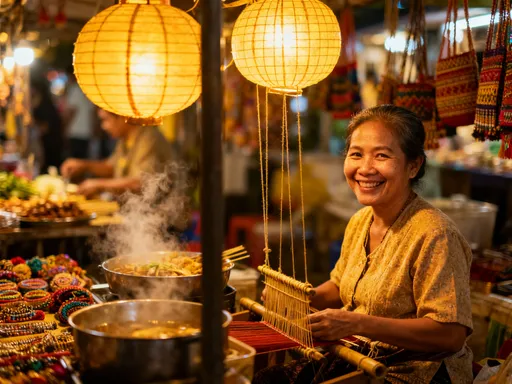
As dusk settles over Chiang Rai, the city undergoes a gentle transformation. Streets that hum with scooters and school traffic during the day give way to foot traffic, soft lighting, and the warm aroma of street food grilling over open flames. The Saturday Night Market, held along the banks of the Mae Kok River, is a feast for the senses. Colorful lanterns sway above rows of wooden stalls, casting a golden glow on handcrafted goods and smiling faces. Live acoustic music—often traditional Lanna melodies played on wooden flutes and string instruments—drifts through the air, adding a lyrical backdrop to the evening.
Wandering through the market, it’s impossible not to be drawn to the textures and colors on display. Hand-stitched shoulder bags from the Akha and Karen hill tribes feature intricate beadwork and geometric patterns passed down through generations. Nearby, silversmiths from local families display delicate jewelry—necklaces, bangles, and earrings—crafted using techniques refined over decades. One vendor, a woman in her fifties with calloused hands and a warm smile, explained that each piece begins with melted silver, shaped by hand without molds. Her pride was evident, not in boastfulness, but in the quiet confidence of someone who knows her craft deeply.
Equally compelling are the paper goods wrapped in saa, a type of mulberry bark paper native to northern Thailand. Journals, notebooks, and greeting cards are often adorned with pressed flowers or handmade ink stamps. These are not mass-produced novelties but small works of art, each slightly imperfect in a way that makes it more human. Food stalls line the outer edges of the market, offering regional specialties like sai ua, a spicy herbal sausage infused with lemongrass and kaffir lime, and khao lam, sticky rice baked in bamboo tubes with coconut and black beans. The scent of grilled meat, chili, and fresh herbs mingles in the air, drawing visitors in like a siren’s call.
One of the most refreshing aspects of the Saturday Night Market is its pricing culture. Unlike some tourist-heavy areas where haggling feels like a chore, here prices are fair and clearly marked. Vendors do not pressure buyers; instead, they welcome questions and stories. This low-pressure environment makes it ideal for women traveling solo or with children, allowing them to browse at their own pace without feeling watched or rushed. The market isn’t about maximizing sales—it’s about sharing a piece of Chiang Rai’s soul.
Sunday Walking Street: Culture Woven into Commerce
If the Saturday Night Market is a sensory delight, the Sunday Walking Street is a cultural celebration. Every Sunday evening, the historic center of Chiang Rai closes to vehicles, transforming into a pedestrian-only promenade lined with over 200 stalls. The atmosphere is lively yet peaceful—a blend of tradition and community spirit that reflects the city’s character. As families stroll hand in hand and elders sit on benches sipping sweet iced tea, the old town becomes a stage for living heritage.
What makes the Sunday Walking Street unique is how it blends commerce with performance. Local artists paint portraits on the spot, potters demonstrate wheel-throwing techniques, and dancers in traditional attire perform short routines between sets of live music. These aren’t paid entertainers brought in for show, but community members sharing their passions. Children gather around a woodcarver shaping a small elephant from teak, their eyes wide with wonder. A group of elderly women laugh as they try on handwoven shawls, debating which color suits whom. The market doesn’t just sell culture—it lives it.
Food remains a central pillar of the experience. While some stalls offer familiar Thai dishes like pad Thai and mango sticky rice, others specialize in regional specialties that tell the story of the land. Khao soi goreng, a deep-fried version of the famous coconut curry noodle soup, is a local favorite—crispy on the outside, soft and rich within. Another standout is nam prik num, a smoky green chili dip served with fresh vegetables and crispy pork rinds, often prepared by grandmothers who bring their family recipes to the market. These food stalls double as social hubs, where travelers sit on low stools and strike up conversations with locals over shared plates.
The Sunday Walking Street also serves as a platform for emerging artisans and young entrepreneurs. Many vendors are women from nearby villages who have learned to turn traditional skills into sustainable livelihoods. One such vendor, a woman in her thirties from a village near Doi Chan, sells hand-dyed scarves using natural pigments from indigo, turmeric, and jackfruit. She explained that her mother taught her the process, and now she teaches her daughters. “It’s not just about making money,” she said. “It’s about keeping our way of life alive.” Her words echo throughout the market, where every purchase supports not just a product, but a legacy.
Behind the Products: Meet the Makers
Beyond the vibrant stalls and smiling vendors lies a network of artisans whose work begins long before market day. Many of the crafts sold in Chiang Rai’s weekend markets are produced in nearby villages, where families have preserved traditional techniques for decades, even centuries. These are not weekend hobbyists, but skilled craftspeople whose livelihoods depend on their artistry. Spending time with them reveals the depth of knowledge embedded in every stitch, carve, and dye.
One afternoon, I visited a small weaving cooperative in a village just outside the city. The women, seated on low benches under a shaded pavilion, worked in silence punctuated by soft laughter and the rhythmic clack of looms. They use cotton grown in their own fields, spun by hand, and dyed with natural extracts. Indigo yields deep blues, turmeric creates golden yellows, and the bark of the jackfruit tree produces rich browns. The process is time-consuming—some scarves take weeks to complete—but the result is fabric that feels alive, each piece subtly different due to variations in dye batches and handwork.
These artisans are not only preserving culture but also sustaining their communities. Many are mothers and grandmothers who balance market work with family life, teaching their daughters and granddaughters the skills they once learned from their own elders. In a world where fast fashion dominates, their work stands as a quiet act of resistance—a commitment to quality, sustainability, and heritage. When travelers buy a handwoven scarf or a bamboo basket, they are not just acquiring a souvenir; they are supporting education, healthcare, and food security for entire families.
Equally important is the environmental stewardship practiced by many of these makers. Bamboo, for example, is harvested sustainably from nearby forests, with only mature stalks taken to allow for regrowth. Mulberry trees used for saa paper are cultivated without pesticides, and water from dyeing processes is filtered before being returned to the land. These practices reflect a deep respect for nature, rooted in Buddhist and animist beliefs that see humans as part of, not above, the natural world. For conscious travelers—especially women who often make household purchasing decisions—this alignment of ethics and aesthetics is deeply meaningful.
Off-the-Beaten-Path Workshops You Can Visit
For those who want to go beyond shopping and experience the making process firsthand, Chiang Rai offers several accessible workshops just a short drive from the city. These are not tourist traps with scripted demonstrations, but real working studios where visitors can participate in authentic craft traditions. While some require advance coordination, most welcome small groups and provide instruction in English or through visual guidance.
One notable destination is a ceramics village in Wiang Kaen, about 45 minutes northeast of Chiang Rai. Here, families have been shaping clay into functional and decorative pieces for generations. Visitors can try their hand at the potter’s wheel, guided by local artisans who demonstrate techniques passed down from their grandparents. The clay, sourced from nearby riverbeds, is cool and smooth, responding slowly to pressure. Even first-time potters leave with a small, lopsided bowl they shaped themselves—a humble but deeply personal memento.
Another enriching experience is visiting a silk farm near Doi Tung, a region renowned for its high-quality handwoven textiles. The farm operates as part of a sustainable development initiative that supports former opium-growing communities. Visitors walk through mulberry groves where silkworms feed, then observe the entire silk-making process—from boiling cocoons to spinning thread, dyeing, and weaving. The highlight for many is the opportunity to try stamp printing on fabric using carved wooden blocks, creating patterns inspired by nature and tradition. These workshops are especially popular with mothers and daughters traveling together, offering a shared creative experience that fosters connection.
Transportation to these sites is straightforward. Public minivans run regularly from Chiang Rai’s central market to nearby districts, and local guesthouses often provide shuttle services or rental scooters. For those who prefer guided access, community-based tourism networks offer ethical tours that ensure fair compensation for hosts. The key is to plan ahead—calling a day in advance to confirm availability and avoid arriving during quiet periods. These visits are not about ticking off attractions but about deepening understanding and appreciation for the hands that create the beauty we admire.
Smart Shopping: What to Buy, What to Skip
With so many beautiful items on display, it’s easy to be overwhelmed. But thoughtful shopping begins with awareness. The most valuable purchases are those that reflect true craftsmanship—items with clean stitching, natural materials, and subtle imperfections that speak to handwork. Look for signs of authenticity: uneven edges on textiles, slight variations in dye, or the weight and grain of handmade paper. These are not flaws, but markers of care and individuality.
Be cautious of goods that seem too perfect or too cheap. Mass-produced imitations of tribal designs are common in tourist areas, often sold with misleading labels like “handmade” or “authentic.” These items not only lack soul but also undermine the very artisans they claim to represent. Instead, seek out cooperatives or stalls where the makers are present and willing to talk about their work. When in doubt, ask questions: Where was this made? Who made it? What materials were used? Vendors who take pride in their craft will happily share these details.
Packing can also be a concern, especially for fragile or bulky items. Ceramic pieces should be wrapped in soft cloth and placed in the center of your suitcase, surrounded by clothing for cushioning. Saa paper products, while durable, should be kept flat to avoid creasing. For plant-based goods like dried herbs or raw silk, check your home country’s customs regulations before purchasing. Some items may require declaration or documentation, particularly if they contain seeds, bark, or unprocessed fibers.
Finally, consider the emotional weight of what you choose to bring home. A $5 trinket may seem like a harmless souvenir, but a $30 handwoven scarf supports a family for a week. Let your purchases reflect your values—quality over quantity, meaning over convenience. When you unpack your suitcase and unfold that indigo-dyed cloth or open your mulberry paper journal, you won’t just see an object. You’ll remember the woman who made it, the scent of the market, the quiet pride in her voice.
Why This Experience Matters Beyond the Purchase
Shopping in Chiang Rai’s weekend markets is not merely a transaction—it is a form of travel that honors presence, patience, and respect. In a world that often values speed and convenience, these markets invite us to slow down, to look closely, to listen. They remind us that culture is not something to be consumed, but something to be experienced, understood, and cherished. Each interaction—with a weaver, a potter, a grandmother selling chili paste—is a small act of connection across language, age, and background.
For women travelers, especially those in midlife who may be seeking deeper meaning in their journeys, these experiences resonate on a personal level. They reflect values often held close: care, continuity, community. To hold a hand-stitched bag or wear a naturally dyed scarf is to carry a story—not just of where you’ve been, but of who you are becoming. Travel, at its best, is not about escape, but about expansion—of perspective, empathy, and self.
Chiang Rai’s markets do not promise luxury or extravagance. They offer something more enduring: authenticity. They challenge the notion that travel must be grand or far-flung to be transformative. Sometimes, the most profound moments happen in the quiet exchange of a smile, the touch of handmade fabric, the taste of a dish cooked with love. These are the souvenirs that last—not in drawers or on shelves, but in the heart.
So the next time you plan a trip to northern Thailand, look beyond the temples and the headlines. Let Chiang Rai surprise you. Wander its weekend markets not with a checklist, but with curiosity. Let your hands guide your choices, and your heart guide your memories. Because the real magic of travel isn’t in the places you see, but in the connections you make—and in Chiang Rai, those connections are waiting in every stitch, every flavor, every smile.