You Won’t Believe These Cultural Worlds Hidden in Nha Trang
Nha Trang, Vietnam, isn’t just sun and sea—its soul lives in vibrant cultural zones where ancient traditions meet modern life. I explored themed areas shaped by Cham heritage, colonial history, and local Vietnamese spirit. From temple ruins to market alleys, each space tells a story. This is travel that feeds your curiosity, not just your camera roll. If you're craving authentic connections, Nha Trang’s culture-rich corners will surprise you.
Introduction to Nha Trang’s Cultural Landscape
Nestled along Vietnam’s central coastline, Nha Trang is often celebrated for its turquoise waters, soft sandy beaches, and lively seaside promenades. Yet beyond the postcard-perfect scenery lies a city deeply rooted in layered histories and living traditions. While many travelers come for relaxation, those who venture into Nha Trang’s cultural zones discover a richer, more resonant experience—one shaped by centuries of migration, faith, and resilience. These areas are not museums frozen in time but dynamic spaces where culture breathes through daily rituals, architecture, food, and festivals.
What makes Nha Trang unique is how its cultural identity unfolds across distinct thematic zones. Each district or landmark reflects a different chapter in the city’s evolution: from the spiritual legacy of the ancient Champa Kingdom to the elegant imprints of French colonial rule, from bustling marketplaces pulsing with local life to serene pagodas perched above the sea. These zones offer more than sightseeing—they invite travelers to witness how history continues to shape contemporary Vietnamese society. Exploring them transforms a simple beach holiday into a journey of understanding.
Cultural exploration enhances travel by fostering deeper human connections. When you step into a local market, observe a temple ceremony, or walk down a street lined with century-old villas, you begin to see the world through the eyes of those who live there. This kind of engagement cultivates empathy, broadens perspective, and creates lasting memories far beyond what any photograph can capture. In Nha Trang, where tradition and modernity coexist so naturally, cultural immersion isn’t an add-on—it’s the heart of the experience.
The Cham Heritage Zone: Tracing Ancient Kingdoms
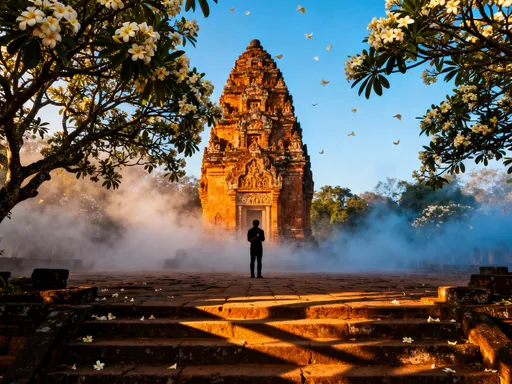
At the northern edge of Nha Trang, rising above the confluence of the Cai River and the South China Sea, stands the Po Nagar Tower complex—a sacred site that has watched over this coast for over a thousand years. Built between the 7th and 12th centuries, these weathered brick towers are among the best-preserved remnants of the once-flourishing Champa civilization. Though the kingdom has long since faded, its spiritual presence remains strong, especially at Po Nagar, where devotees still come daily to light incense, offer flowers, and whisper prayers to the goddess Yan Po Nagar, revered as the protector of the region and mother of the Cham people.
The architecture of the towers is both striking and symbolic. Constructed without mortar, the red-brick structures rely on a sophisticated interlocking technique that has allowed them to endure monsoons, wars, and time. Their tapering spires reach skyward like flames, echoing Hindu temple designs from India, which influenced Cham religious art. Carvings of deities, mythological creatures, and lotus motifs adorn the walls, each telling fragments of ancient stories. The main tower, dedicated to Yan Po Nagar, is the tallest and most revered, while smaller shrines honor other figures from the Cham pantheon.
For visitors, the experience is one of quiet reverence. Unlike heavily commercialized sites, Po Nagar retains an atmosphere of authenticity. You may see elderly women in flowing white robes performing personal rituals, or families bringing children to pay respects for the first time. Local guides, often fluent in Vietnamese, English, and French, provide context about the site’s history and significance. They explain how the Cham people, though now a minority in Vietnam, continue to preserve their language, customs, and faith—especially during festivals like the Kate Festival, when the towers come alive with music, dance, and ceremonial processions.
Photography is permitted in most areas, but respectful behavior is essential. Visitors are asked to dress modestly—covering shoulders and knees—and to avoid walking in front of worshippers or touching sacred objects. The site is especially peaceful in the early morning when sunlight filters through the trees and the scent of sandalwood lingers in the air. For those interested in learning more, the Cham Museum in nearby Da Nang houses an extensive collection of Cham sculptures and artifacts, though Nha Trang itself offers enough to spark deep appreciation for this enduring culture.
Old Quarter & Market Life: The Pulse of Daily Culture
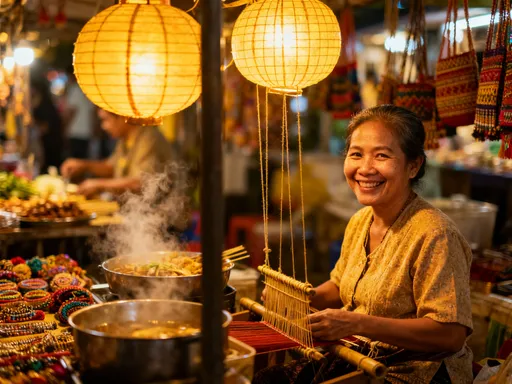
Just a short walk from the beachfront lies Nha Trang’s central market, a vibrant labyrinth of stalls that offers one of the most immersive cultural experiences in the city. Open from dawn until late afternoon, the market thrives with energy—vendors call out prices, motorbikes weave through narrow aisles, and the air is thick with the aroma of grilled fish, ripe mangoes, and pungent fish sauce. This is not a tourist market selling souvenirs; it is a working marketplace where local families shop for daily essentials, negotiate prices, and exchange news. To walk through it is to step directly into the rhythm of Vietnamese life.
The market is organized by section: one area overflows with tropical fruits—dragon fruit, rambutan, mangosteen, and jackfruit—stacked in colorful pyramids. Nearby, fishermen lay out their morning catch: squid, barracuda, clams, and prawns glistening on beds of ice. Butchers sell pork, duck, and chicken, while dried seafood hangs in fragrant bundles from the ceiling. In the fabric section, bolts of silk, cotton, and embroidered cloth are displayed in brilliant hues, reflecting regional textile traditions. Every purchase, every interaction, is a small act of cultural expression.
Perhaps the most revealing aspect of the market is its role in the family economy. Many vendors are women who have run the same stall for decades, often taking over from their mothers or aunts. Their children may help during school holidays, learning the trade through observation and practice. Prices are rarely fixed, and haggling is expected—but done with a smile and mutual respect. A few simple Vietnamese phrases, like “bao nhiêu tiền?” (how much?) or “rẻ quá” (too expensive), go a long way in building rapport. Even without fluent language, a nod, a gesture, or shared laughter can create a moment of connection.
Street food stalls surrounding the market offer another window into local culture. Here, you can taste dishes that have been passed down for generations: bún chả, a noodle soup with spring rolls and peanut sauce; bánh xèo, a crispy rice flour pancake filled with shrimp and bean sprouts; and fresh coconut coffee served in the shell. These meals are not just sustenance—they are expressions of regional identity, shaped by climate, trade, and tradition. Eating at a street stall, sitting on a tiny plastic chair, becomes a lesson in humility, curiosity, and appreciation for simplicity.
Colonial Echoes: French-Inspired Architecture and Urban Design
As you move through Nha Trang’s city center, you begin to notice a distinct architectural style that sets it apart from other Vietnamese coastal towns. Along Tran Phu Street and in quieter residential lanes, you’ll find buildings with pastel-colored facades, wrought-iron balconies, shuttered windows, and tiled roofs—remnants of French colonial rule that lasted from the mid-19th century until the mid-20th century. Though Vietnam has long reclaimed its independence, these structures remain as quiet testaments to a complex historical period, blending European design with tropical adaptations.
One of the most iconic examples is the Nha Trang Cathedral, also known as the Stone Church. Built in 1928, its twin bell towers rise above the city skyline in pale pink stone, a rare sight in a predominantly Buddhist country. The Gothic Revival style—with pointed arches, stained glass, and a central nave—contrasts with the surrounding low-rise buildings, yet it has become a beloved landmark. Locals and tourists alike visit not only for worship but also to admire the craftsmanship and peaceful courtyard. Mass is still held regularly, and visitors are welcome to enter quietly during non-service hours.
Scattered throughout the city are other colonial-era buildings: former administrative offices, schools, and private villas that now serve as hotels, cafes, or government offices. Some have been carefully restored, their facades repainted and balconies repaired, while others show signs of age, with peeling paint and overgrown vines. Yet even in decay, they possess a quiet elegance—a reminder of a bygone era that still influences the city’s aesthetic. Walking through these neighborhoods feels like stepping into a sepia-toned photograph, where time moves a little slower and beauty lingers in the details.
The French also shaped Nha Trang’s urban planning, introducing wide boulevards, tree-lined avenues, and public squares designed for leisure and social gathering. Today, these spaces are used for morning tai chi sessions, evening strolls, and weekend markets. The colonial legacy is not without controversy, but in Nha Trang, it has been absorbed into the city’s identity rather than erased. It stands as a layer in the cultural mosaic—one that invites reflection on how history, even when complicated, can contribute to a place’s unique character.
Buddhist Spirituality in Action: Pagodas and Coastal Temples
Perched on a hillside overlooking Nha Trang Bay, Long Son Pagoda is one of the city’s most iconic spiritual sites. To reach it, visitors climb a winding staircase of 150 steps, flanked by a massive stone dragon that curves up the hillside like a guardian. At the top, a 24-meter white Buddha statue sits in serene meditation, arms outstretched in a gesture of compassion. From this vantage point, the entire city unfolds below—the glittering sea, the ribbon of beach, the cluster of buildings—creating a powerful sense of peace and perspective.
Long Son is not just a tourist attraction; it is an active place of worship. Monks in saffron robes move quietly through the temple grounds, tending to altars, ringing bells, and receiving visitors. Devotees light incense, bow before statues of the Buddha and bodhisattvas, and leave offerings of fruit and flowers. The rhythm of daily practice—morning chants, meditation, scripture study—continues uninterrupted, even as cameras click and voices murmur. For many Vietnamese, Buddhism is not a separate religion but an integral part of life, guiding ethics, family values, and personal reflection.
What makes coastal pagodas like Long Son especially meaningful is their harmony with nature. Unlike urban temples, these sites are often built in elevated or secluded locations, where the sound of waves, the rustle of trees, and the play of light enhance the meditative atmosphere. The sea, vast and ever-changing, becomes a metaphor for impermanence—a core Buddhist teaching. Visitors often report feeling a deep sense of calm, not because of any ritual, but simply from being present in such a space.
For travelers, visiting a pagoda requires mindfulness. Dressing modestly—avoiding shorts, tank tops, or revealing clothing—is essential. Shoes must be removed before entering prayer halls, and loud conversations or flash photography are discouraged. The best times to visit are early morning or late afternoon, when the light is soft and the crowds are thin. Some visitors choose to sit quietly for a few minutes, observing the rituals without participating—a simple act of respect that can become a moment of personal reflection.
Cultural Festivals and Seasonal Rhythms
One of the most powerful ways to experience Nha Trang’s living culture is through its festivals, which bring the city’s diverse communities together in celebration. These events are not staged for tourists but rooted in religious, agricultural, and historical traditions. When timed right, a visit can coincide with moments of extraordinary beauty and communal joy.
The Kate Festival, celebrated annually in September or October by the Cham community, is one of the most significant. Held at Po Nagar and other Cham sites, it honors ancestral spirits and deities with elaborate rituals, traditional dances, and music performed on unique instruments like the gong and flute. Women wear ornate costumes in bright reds and yellows, their hair braided with flowers, while men play drums and chant ancient hymns. The atmosphere is both solemn and festive, a reminder that spirituality and celebration are not opposites but companions.
Buddha’s Birthday, known locally as Vesak, is another major event. Temples across the city are decorated with lanterns and lotus flowers, symbolizing purity and enlightenment. Devotees gather before dawn to release caged birds—a gesture of liberation—and to offer rice, incense, and candles at altars. In some neighborhoods, free vegetarian meals are served to all, embodying the Buddhist principles of generosity and compassion. Even non-Buddhists are welcomed to observe or participate respectfully.
Fishing communities also mark their own seasonal festivals, giving thanks for bountiful catches and praying for safety at sea. These celebrations often include boat processions, offerings placed on the shore, and communal feasts featuring fresh seafood. While less formalized than religious festivals, they reflect the deep connection between Nha Trang’s people and the ocean that sustains them.
For travelers, witnessing a festival is a privilege, not a right. It’s important to observe from a respectful distance, avoid intrusive photography, and follow local cues. Many festivals are not widely advertised, so checking with local tourism offices or guesthouse staff in advance can help you plan accordingly. Attending one, even quietly, can be the most meaningful moment of a trip—a reminder that culture is not something to be consumed, but to be honored.
Practical Guide: Navigating Cultural Zones Respectfully and Easily
Exploring Nha Trang’s cultural zones is both accessible and rewarding, especially with a little preparation. The city is compact enough to navigate on foot, particularly between the beachfront, the Old Quarter, and Po Nagar Tower. For longer distances—such as the trip to Long Son Pagoda—renting a motorbike is a popular and affordable option, though hiring a taxi or using ride-hailing apps like Grab is also convenient. Local buses run along major routes, offering a budget-friendly way to travel like a local, though schedules may be limited.
Timing your visits can greatly enhance your experience. Morning is ideal for markets, when produce is freshest and vendors are most active. Temples and pagodas are best visited early, when the air is cool and rituals are underway. Late afternoon offers golden light for photography and a chance to see locals gathering for evening prayers or family walks. Avoiding weekends and public holidays can help reduce crowds, though attending during festival season may be worth the extra people.
Respect is the cornerstone of ethical cultural tourism. Dress modestly when visiting religious sites—long pants or skirts and shirts with sleeves are recommended. Always ask permission before photographing people, especially during ceremonies. Support local artisans by purchasing crafts directly from makers, rather than mass-produced souvenirs. And remember: a smile, a quiet presence, and a willingness to learn speak louder than any language.
Finally, slow down. Nha Trang’s cultural richness reveals itself not in checklists, but in moments—a shared bowl of noodles, a monk’s nod, the sound of gongs echoing at dusk. By moving with intention and openness, you honor not just the places you visit, but the people who call them home.
Conclusion: Why Culture Makes Nha Trang Unforgettable
Nha Trang’s beaches are beautiful, but its true magic lies in the cultural zones that pulse with history, faith, and everyday life. These spaces—whether ancient towers, bustling markets, colonial streets, or hilltop temples—offer more than sights. They offer stories. They invite travelers to look beyond the surface, to listen, to pause, and to connect. In doing so, they transform a vacation into a journey of understanding.
The city’s cultural richness is not preserved behind glass but lived in the gestures of a vendor, the chant of a monk, the steps of a dancer during festival season. It reminds us that travel is not just about where we go, but how we see. When we approach a place with curiosity and respect, we don’t just witness culture—we become part of its ongoing story.
So as you plan your trip to Nha Trang, let the sun and sea welcome you—but let the culture change you. Walk through the market with open eyes. Stand quietly in a temple. Learn a few words of Vietnamese. Let the city’s layered soul surprise you. Because in the end, the most unforgettable journeys are not measured in miles, but in moments of human connection. And in Nha Trang, those moments are everywhere, waiting to be discovered.