You Won’t Believe What I Found in Almaty’s Quiet Corners
Almaty isn’t just a city—it’s a rhythm. I wandered for days without an agenda, letting the urban pulse guide me. From leafy avenues to Soviet-era courtyards, I discovered how slowing down reveals the soul of a place. This is urban exploration at its most authentic: no crowds, no checklists, just moments that feel quietly extraordinary. In a world where travel often means ticking off landmarks and rushing between photo spots, Almaty offers something different—a chance to step into a gentler pace, where discovery happens not through speed but through stillness. It’s a city that rewards patience, curiosity, and quiet observation, revealing its depths to those willing to look beyond the surface.
The Heartbeat of a Mountain City
Almaty, nestled at the northern edge of the Tian Shan mountain range, carries a rare distinction among Central Asian cities—it breathes. Unlike the arid plains of neighboring regions, Almaty is lush, green, and alive with seasonal shifts. Snow dusts its rooftops in winter, while spring brings cherry blossoms that line its avenues in soft pinks and whites. The city’s geography shapes its character: the mountains are not just a distant view but an ever-present force, framing daily life and influencing everything from weather patterns to residents’ routines. For centuries, this region served as a crossroads along ancient trade routes, and today, that legacy lives on in its diverse population and layered cultural identity.
What makes Almaty unique is how seamlessly nature integrates with urban life. Parks are not afterthoughts—they are central to the city’s design and function. Green corridors stretch through neighborhoods, and tree-lined boulevards provide shade and serenity. Many locals treat the nearby Medeu skating rink or the trailheads of Kok-Tobe not as tourist attractions but as regular extensions of their living space. This harmony between city and nature creates an environment where slow travel isn’t just possible—it feels natural. The pace adjusts without effort, inviting visitors to walk more, talk more, and notice more.
Slow travel in an urban context means shifting focus from quantity to quality. Instead of trying to see everything, the goal becomes experiencing deeply. In Almaty, this approach works because the city’s scale is human. It’s large enough to offer variety but compact enough that exploration on foot or by public transport remains practical. There’s no pressure to rush. A morning might begin with a quiet walk through a residential district, followed by coffee in a neighborhood café, then an unplanned detour into a small museum or a conversation with a local vendor. These unscripted moments, when allowed to unfold naturally, often become the most memorable parts of a journey.
Walking the Arbat: More Than a Pedestrian Street
Zhibek Zholy, affectionately known as the Arbat by locals, is one of Almaty’s most iconic thoroughfares. Named after the ancient Silk Road trade route connecting China and Europe, this pedestrian-only street pulses with energy yet maintains a relaxed rhythm. Street musicians play traditional dombra melodies alongside modern pop covers, while elderly men gather around chessboards under shaded awnings. Bookstalls overflow with secondhand volumes in Russian, Kazakh, and occasionally English—titles ranging from Soviet-era poetry to contemporary Central Asian fiction. It’s a place where history and daily life intersect, and where simply sitting on a bench can become an immersive cultural experience.
What sets the Arbat apart is not its architecture or retail offerings but the way it encourages lingering. Unlike commercial strips designed for quick consumption, this street invites people to stay. Couples stroll hand in hand, families pause for ice cream, and students spread out textbooks on café tables. The absence of vehicles changes the sensory experience—footsteps echo gently, laughter carries clearly, and conversations drift through the air like music. By walking slowly, one begins to notice subtle details: the craftsmanship of wrought-iron railings, the faded paint on century-old facades, the way sunlight filters through plane trees in late afternoon.
Public spaces like Zhibek Zholy play a vital role in fostering community. In a city where winters can be long and isolating, these open areas serve as social connectors. They are democratic by nature—accessible to all, regardless of income or background. For visitors, observing how locals use such spaces offers insight into the city’s values. Respectful engagement means more than just observing; it involves participating without disrupting. Buying a tea from a vendor, smiling at a performer, or simply walking with awareness helps build invisible threads of connection. These small acts contribute to a deeper understanding of place, transforming a casual visit into a meaningful exchange.
Hidden Courtyards and Soviet-Era Charm
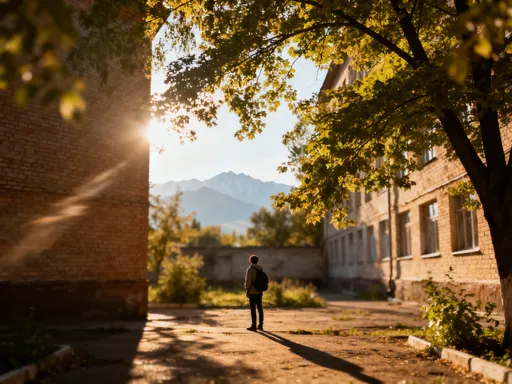
One of Almaty’s best-kept secrets lies behind unassuming entrances in its residential neighborhoods—courtyards hidden within five-story Khrushchev-era apartment blocks. Built during the mid-20th century as part of Soviet urban planning, these buildings were designed to house growing populations efficiently. Yet what was intended as functional housing has evolved into something richer over time. Residents have transformed these inner yards into vibrant micro-communities, where flower gardens bloom between benches, children play soccer after school, and neighbors share meals during summer evenings.
These courtyards function as shared oases—private enough to foster intimacy, yet open enough to welcome interaction. Clotheslines crisscross above, laden with drying laundry; potted plants line stairwell windows; and hand-painted signs announce community events or lost pets. While they may seem ordinary at first glance, they reveal the quiet resilience and creativity of everyday life. Unlike curated tourist sites, these spaces are authentic and unperformed. They exist not for visitors but for those who live there, making access a privilege rather than a right.
For travelers interested in exploring these areas respectfully, certain guidelines apply. First, timing matters—mornings and late afternoons tend to be livelier and more welcoming than midday, when many residents are at work. Second, demeanor counts: walking calmly, avoiding loud conversations, and refraining from photographing people without permission demonstrates consideration. Blending in—dressing modestly, carrying a reusable bag, perhaps sipping tea from a local shop—helps reduce the sense of intrusion. Most importantly, visitors should remember that these are homes, not exhibits. Observing with humility allows for genuine appreciation without exploitation.
Green Spaces That Breathe
Almaty’s reputation as one of the greenest cities in Central Asia is well earned. With over 200 species of trees and shrubs planted throughout its urban core, the city maintains an average of 25 square meters of green space per resident—significantly higher than many global metropolises. Two parks stand out for their role in daily life: Panfilov Park and First President’s Park. The former, named after a group of Soviet soldiers who died defending Moscow in World War II, features a mix of manicured lawns, walking paths, and historical monuments. The latter, more modern in design, includes fountains, open plazas, and extensive cycling lanes.
What makes these parks special is not just their beauty but how they are used. In the early morning, groups gather for tai chi, qigong, and stretching exercises. Elderly couples walk slowly along tree-lined paths, while parents push strollers or chase toddlers around playgrounds. By late afternoon, students arrive with notebooks and laptops, settling onto grassy patches beneath walnut or maple trees. On weekends, families spread out picnic blankets, sharing food and stories. These routines may seem mundane, but they offer a window into the city’s rhythm. Green spaces here are not passive landscapes—they are active participants in social life.
Urban planners have long recognized the psychological benefits of green environments. Studies show that access to nature reduces stress, improves mood, and enhances cognitive function. In Almaty, this connection is evident in the way people move through and interact with parks. The presence of trees lowers ambient noise and temperature, creating microclimates of comfort even in summer heat. Birds sing in the canopy, squirrels dart across paths, and the scent of pine lingers after rain. For visitors, spending time in these spaces offers more than relaxation—it fosters a sense of belonging. Sitting quietly on a park bench, watching the flow of life, becomes a form of meditation, grounding the traveler in the present moment.
Local Cafés: Where Time Slows Down
In recent years, Almaty has seen a quiet revolution in its coffee culture. While international chains exist, a growing number of independent cafés have taken root in residential districts and side streets. These neighborhood spots prioritize atmosphere over aesthetics, offering simple menus, locally roasted beans, and warm service. Many operate out of repurposed Soviet-era buildings or converted homes, blending historical charm with contemporary comfort. What unites them is a shared philosophy: coffee is not a commodity to be consumed quickly, but an experience to be savored.
Staying longer in one café, rather than hopping between Instagram-famous locations, allows for deeper engagement. Regular patrons include university students working on theses, freelancers typing away on laptops, and retirees reading newspapers with glasses perched on noses. Conversations unfold in multiple languages—Kazakh, Russian, English—reflecting the city’s cosmopolitan fabric. Music, if present, tends to be soft instrumental or jazz, never overpowering. The absence of urgency creates a sanctuary-like feel, where time expands rather than contracts.
Observing social rhythms in these spaces reveals much about Almaty’s character. Friendships are built over repeated visits; baristas know customers by name; and strangers occasionally strike up conversations. This sense of continuity contrasts sharply with the transient nature of tourist hubs. For visitors, choosing to linger in a local café becomes an act of cultural immersion. Ordering a flat white and settling in for an hour or two—reading, journaling, or simply watching the world go by—aligns with the ethos of slow urban travel. It’s not about productivity or documentation, but presence.
Urban Art and Quiet Resistance
Scattered across Almaty’s walls and alleyways, street art tells stories that official monuments often do not. Unlike government-sponsored murals, these works emerge organically, often in overlooked corners of the city. Themes range from cultural pride—depictions of traditional Kazakh motifs and nomadic symbols—to subtle commentary on social change. One mural in the Alatau district portrays a young girl holding a book shaped like a dove, symbolizing education and peace. Another, near the Abay Opera House, blends Soviet-era architectural elements with floral patterns, suggesting a dialogue between past and present.
What distinguishes Almaty’s urban art is its authenticity. Much of it is created by local artists, not for tourism campaigns but for residents. Locations are chosen intuitively—on the side of an apartment building, beneath a railway overpass, or along a seldom-used staircase. These pieces are not always preserved; some fade with weather, others are painted over. Yet their impermanence adds to their meaning, reflecting the transient nature of urban life itself. For the attentive traveler, discovering such art feels like uncovering a secret—a whisper of creativity in the everyday.
Slow travel enhances the ability to see beyond the surface of these visuals. Rushing past might reduce a mural to a backdrop for a selfie, but lingering allows for interpretation. Who painted this? What message were they conveying? How does it relate to the neighborhood around it? These questions deepen the experience, turning observation into reflection. Moreover, engaging with street art ethically means respecting its context—avoiding vandalism, not obstructing access, and acknowledging the artist’s intent. In doing so, visitors honor the creative spirit that enriches the city’s fabric.
Rhythm Over Rush: Why Almaty Works for Slow Urban Travel
Almaty succeeds as a destination for mindful exploration because its physical layout and cultural norms naturally support a slower pace. The city is neither too large nor too dense, allowing for easy navigation by foot or public transit. Buses and the metro system are reliable and affordable, connecting key districts without the congestion common in larger capitals. Residential areas are interspersed with parks, markets, and small businesses, creating a patchwork of discovery opportunities. Unlike cities built for speed, Almaty invites detours, pauses, and unplanned encounters.
Practical considerations further enhance the slow travel experience. Mornings are ideal for walking, when temperatures are mild and streets are less crowded. Starting at Panfilov Park and moving toward the Arbat allows for a gradual immersion into the city’s pulse. Afternoon visits to quieter neighborhoods—such as those near the Botanical Garden or along Seifullin Avenue—offer chances to explore courtyards and local shops. Evening strolls along Esenbin Street, where tea houses glow softly under string lights, provide a gentle wind-down. Timing visits to avoid peak tourist hours ensures a more authentic encounter with daily life.
Ultimately, Almaty teaches a powerful lesson: cities are not just destinations to be seen, but living spaces to be felt. True connection arises not from checking off attractions but from allowing oneself to be shaped by a place. It comes from hearing the echo of dombra music in a courtyard, smelling fresh samsa from a street oven, or sharing a smile with a stranger on a park bench. These moments, small and unremarkable in isolation, accumulate into a deeper understanding of culture and community. Travelers who embrace this rhythm leave not with souvenirs, but with memories that resonate long after they return home.
Almaty taught me that urban travel doesn’t have to be loud or rushed. True connection comes from lingering, listening, and letting the city speak. In its quiet parks, hidden yards, and unhurried moments, I found a deeper way to travel—one that stays with you long after you leave.