You Won’t Believe What Yaoundé’s Skyline Hides
Yaoundé, Cameroon, isn’t the kind of city that hits you with instant glamour—but that’s exactly why it’s unforgettable. Between misty hills and tangled greenery, its evolving skyline tells a story of quiet resilience and cultural fusion. I walked its winding streets, caught sunsets from unexpected rooftops, and discovered how urban life here pulses in rhythm with nature. This isn’t just a capital city—it’s a living landscape where concrete meets canopy. Unlike the towering skylines of Lagos or Nairobi, Yaoundé unfolds gently, shaped by elevation, vegetation, and the steady beat of daily life. Its beauty lies not in spectacle, but in subtlety: in the way red-tiled roofs nestle into lush slopes, in the quiet dignity of colonial-era facades, and in the vibrant energy of markets that breathe with the city’s rhythm. This is a capital that reveals itself slowly, rewarding those who take the time to look beyond the surface.
First Impressions: A Capital That Doesn’t Shout
Arriving in Yaoundé, one does not encounter the imposing skyline typical of many national capitals. There are no clusters of glass towers piercing the clouds, no sweeping boulevards lined with monumental architecture. Instead, the city reveals itself in layers—rolling hills draped in green, narrow roads that twist like vines, and clusters of buildings that follow the natural contours of the land. This is a city shaped by topography, not imposed upon it. The absence of uniformity is not a sign of neglect, but of adaptation. Yaoundé grows where the land allows, and its urban form reflects a dialogue between human settlement and natural terrain.
The city’s location in a series of valleys and ridges sets it apart from other African capitals like Accra or Nairobi, which often spread across flatter plains. In Yaoundé, elevation dictates development. Neighborhoods rise and fall with the hills, creating a patchwork of vistas and hidden enclaves. What might appear from a distance as a quiet residential zone could, upon closer inspection, be a bustling commercial hub tucked into a slope. This topographical complexity makes navigation both a challenge and a delight—every turn offers a new perspective, a different light, a sudden view of the city stretching into the distance.
Architecturally, Yaoundé presents a mosaic of eras and influences. In areas like Quartier Gare and the Central Market, remnants of French colonial design linger in low-rise buildings with shuttered windows, tiled roofs, and shaded verandas. These structures, though aging, retain a quiet elegance, their faded facades whispering stories of a bygone administrative era. Alongside them rise modern government buildings—sober, functional, and often monumental in scale—such as the National Assembly complex, which stands as a symbol of post-independence authority. Yet much of the city’s growth has occurred informally, with homes and shops constructed incrementally, responding to immediate needs rather than master plans. This blend of planned and organic development gives Yaoundé a textured, lived-in character that resists easy categorization.
The Rhythm of Urban Life: How the City Moves
To understand Yaoundé is to follow its daily rhythm—the ebb and flow of people, goods, and energy that animate its streets. Mornings begin early, with commuters spilling onto sidewalks, traders setting up stalls, and the first waves of *bend-skin* minibuses rumbling to life. These brightly painted, often overcrowded vehicles are the lifeblood of the city’s transport system, weaving through traffic with a mix of urgency and improvisation. More than mere transit, the *bend-skin* culture shapes the city’s visual and social landscape: their routes define commercial corridors, their stops become informal gathering points, and their presence adds a constant hum to the urban soundscape.
The Mokolo Market, one of the city’s largest, exemplifies this rhythm. By mid-morning, it is a symphony of movement—vendors arranging pyramids of plantains, customers bartering over prices, children darting between stalls laden with textiles, spices, and household goods. The air is thick with the scent of grilled fish, fresh herbs, and damp earth. This is not a curated shopping experience, but a raw, unfiltered expression of urban commerce. The market’s vitality spills into surrounding streets, turning intersections into temporary hubs of exchange. Yet just a few blocks away, in the residential neighborhoods of Etoug-Ebe or Bastos, the pace slows dramatically. Tree-lined lanes give way to quiet compounds, where families gather under mango trees and the only sounds are birdsong and distant radio music.
This contrast—between bustling commercial zones and tranquil hillside enclaves—is central to Yaoundé’s identity. The city does not impose a single tempo on its inhabitants. Instead, it accommodates multiple rhythms, allowing formal and informal economies to coexist, and structured planning to share space with spontaneous adaptation. This duality is reflected in its visual character: wide avenues with official signage lead to narrow dirt paths where goats graze; modern office buildings stand beside homes built from repurposed shipping containers. Yaoundé’s urban identity is not defined by uniformity, but by this very tension between order and improvisation, between what is planned and what emerges.
Green Spines: Nature as Part of the Cityscape
One of Yaoundé’s most defining features is its integration with nature. Unlike many rapidly urbanizing African capitals, where green spaces are sacrificed to concrete, Yaoundé retains a network of forests, parks, and tree-lined corridors that weave through the city. The Mefou National Park, located just a short drive from the city center, serves as a vital ecological buffer, protecting endangered primates and offering residents a refuge from urban life. But nature’s presence is not confined to designated reserves. It permeates the everyday—avenues shaded by towering flamboyant and ceiba trees, gardens spilling over compound walls, and patches of forest clinging to steep hillsides where development has not yet reached.
These green spines are more than aesthetic enhancements; they play a functional role in the city’s environmental health. Trees help regulate temperature in a climate where humidity can be oppressive, reduce air pollution from traffic, and prevent soil erosion on the city’s many slopes. During heavy rains, the natural drainage provided by vegetation helps mitigate flooding—a growing concern in many African cities. Urban planners have long recognized the value of these ecosystems, though balancing preservation with development remains a challenge. As demand for housing and infrastructure increases, pressure mounts to clear forested areas for construction. Yet the city’s topography makes large-scale clearing difficult, and in many cases, this has inadvertently protected green zones.
The relationship between nature and urban form is also evident in neighborhood boundaries. In Yaoundé, valleys and ridges often serve as natural dividers, shaping the layout of districts without the need for artificial barriers. A walk from the city center to the outskirts might take you through dense foliage, across small streams, and past groves of banana plants—all within what is technically an urban area. This blending of city and countryside creates a unique sense of place, where residents can feel simultaneously urban and immersed in nature. For many families, gardening is not a hobby but a necessity, with small plots yielding vegetables, fruits, and medicinal plants. In this way, Yaoundé’s greenery is not just ornamental—it is woven into the fabric of daily survival and cultural practice.
Architectural Layers: A City Built Over Time
Yaoundé’s architecture is a timeline written in brick, concrete, and corrugated metal. The earliest layer dates back to the German colonial period, though few structures from that era remain. More visible is the French colonial imprint, particularly in the central districts. Buildings around Quartier Gare and the Central Market feature symmetrical layouts, thick walls for insulation, and shaded balconies designed for ventilation in a tropical climate. These structures, though modest in height, were built with permanence in mind, reflecting the administrative ambitions of a colonial capital. Today, many serve as shops, offices, or residences, their original purpose transformed but their form preserved.
The post-independence era brought a new architectural language—one of national pride and modernity. Government buildings constructed in the 1960s and 1970s, such as the Cameroon Parliament and the Presidential Palace, reflect a blend of modernist design and symbolic grandeur. These structures often feature expansive plazas, geometric facades, and materials meant to convey strength and stability. While not always accessible to the public, their presence shapes the city’s institutional identity. They stand as monuments to sovereignty, anchoring Yaoundé’s role as the seat of national power.
In recent decades, a third wave of development has begun to reshape the skyline. In affluent neighborhoods like Bastos and Awae, modern villas with glass facades, solar panels, and landscaped gardens reflect rising incomes and changing tastes. Mixed-use buildings combining retail, offices, and apartments are emerging, particularly along major roads like Rue Ahmadou Ahidjo. These developments signal a shift toward denser, more vertical urbanism, though they remain limited in scale compared to other African capitals. What distinguishes Yaoundé’s modern architecture is its responsiveness to context—many new buildings incorporate shaded walkways, courtyards, and green roofs, blending contemporary design with climate-appropriate features. This incremental evolution, rather than abrupt transformation, allows the city to grow without erasing its past.
Viewpoints That Tell Stories
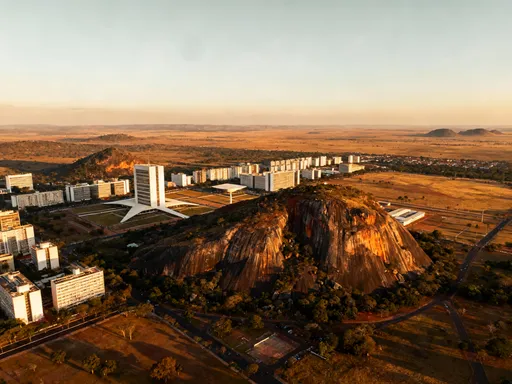
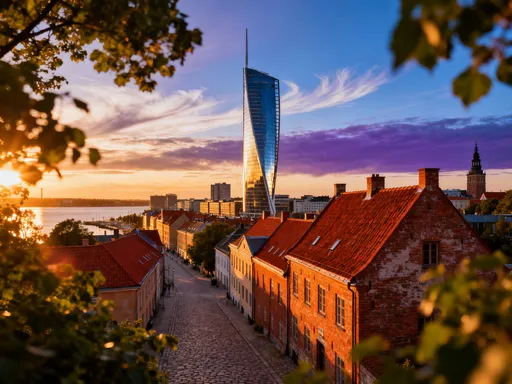
To truly grasp Yaoundé’s character, one must see it from above. The city’s hilly terrain offers numerous vantage points, each revealing a different facet of its identity. Rooftop restaurants and hotel terraces in neighborhoods like Bastos provide panoramic views at dusk, when the city glows in layers of amber and gold. From these heights, the patchwork of red-tiled roofs, metal sheets, and treetops becomes a map of urban life—each cluster of buildings telling a story of family, commerce, or community. The absence of towering skyscrapers means the skyline remains human-scaled, with no single structure dominating the view.
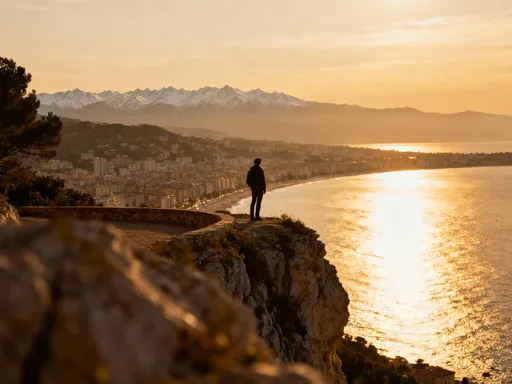
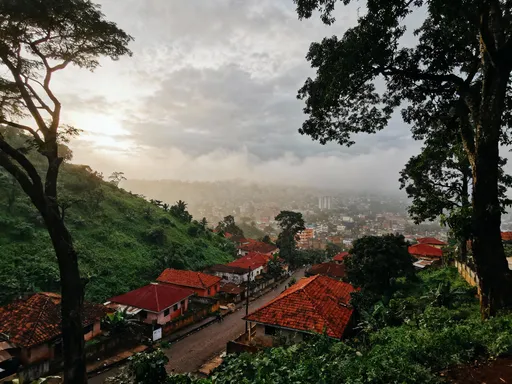
For a more immersive experience, the slopes of Mont Febe, located just outside the city, offer one of the most breathtaking perspectives. A short hike or drive up the mountain rewards visitors with a sweeping vista of Yaoundé nestled in the valley. On clear mornings, mist curls around the treetops, and the city emerges slowly, like a painting coming into focus. From this height, the relationship between urban and natural becomes unmistakable—the city does not conquer the landscape, but inhabits it. Roads follow ridgelines, neighborhoods cling to slopes, and green corridors thread through developed areas, creating a mosaic rather than a monolith.
What makes these viewpoints so powerful is not just their beauty, but their narrative quality. Each elevation change reveals a new layer of the city’s story—how it has grown, how it functions, and how it balances competing demands. A view from a Bastos rooftop might highlight modernity and affluence, while a glance from a hillside in Mokolo captures the density and vitality of informal settlements. These shifting perspectives remind us that Yaoundé cannot be understood from a single angle. Its identity is multifaceted, shaped by geography, history, and the daily choices of its residents.
Street Art and Urban Expression
Beyond formal architecture, Yaoundé’s visual identity is shaped by a vibrant culture of informal creativity. In neighborhoods like Cités Vertes, Etoug-Ebe, and parts of Mokolo, walls serve as canvases for murals, graffiti, and painted advertisements. These artworks are not commissioned by the city, but emerge organically—from youth collectives, local businesses, or individual artists expressing their vision. Common themes include national pride, social unity, environmental awareness, and cultural heritage. A wall in Cités Vertes might depict a Cameroonian flag woven from traditional patterns, while another in Etoug-Ebe features a portrait of a local musician surrounded by symbols of resilience.
This street art is more than decoration; it is a form of civic dialogue. In a city where public spaces are often dominated by commercial or governmental messaging, these murals reclaim visibility for ordinary voices. They reflect concerns about education, health, and opportunity, often using bold colors and symbolic imagery to convey messages without words. Some works incorporate recycled materials, turning discarded metal or wood into sculptural elements—a testament to both creativity and resourcefulness. Though not always preserved, these expressions contribute to Yaoundé’s evolving aesthetic, adding layers of meaning to otherwise utilitarian surfaces.
The presence of street art also signals a growing youth culture that values self-expression and identity. In schools and community centers, art programs are increasingly common, nurturing the next generation of visual storytellers. Social media has amplified their reach, allowing local artists to share their work beyond neighborhood boundaries. While Yaoundé may not yet have an official street art district, the organic spread of these works suggests a grassroots movement that could shape the city’s cultural future. In a place where formal institutions move slowly, such creativity offers a dynamic alternative—a way to imagine and represent the city on one’s own terms.
The Future of Yaoundé’s Skyline: Growth and Identity
As Cameroon’s population grows and urbanization accelerates, Yaoundé faces critical choices about its future. Infrastructure projects, including road expansions and public transit initiatives, are underway to improve connectivity and reduce congestion. New residential and commercial developments are rising, particularly along major arteries, responding to demand for modern housing and office space. These changes promise economic opportunity and improved living conditions, but they also raise concerns about environmental impact, cultural preservation, and equitable access to urban resources.
One of the city’s greatest challenges will be balancing modernization with sustainability. Unlike capitals that have embraced vertical growth, Yaoundé’s expansion is constrained by its topography. This limitation, however, may prove to be an advantage. By encouraging low-rise, decentralized development, the city can preserve its green corridors and maintain its human scale. Urban planners are exploring ways to integrate eco-friendly design—such as rainwater harvesting, solar energy, and green roofs—into new construction. There is also growing interest in participatory planning, where residents contribute to decisions about land use and neighborhood development.
Culturally, Yaoundé’s identity is not defined by grand monuments or global branding, but by its quiet resilience and adaptability. Its skyline may never rival those of Johannesburg or Cairo, but that is not its ambition. Instead, the city offers a different model of urbanism—one that grows with its hills, listens to its people, and respects its natural surroundings. This organic evolution, though slow, allows for deeper roots and more meaningful connections between place and community. In a world where cities often strive for spectacle, Yaoundé’s understated presence is a reminder that strength can be quiet, and progress does not always require height.
A City That Grows With Its Hills
Yaoundé does not announce itself with fanfare. It does not demand attention like a metropolis built for visibility. Instead, it reveals itself gradually—to those who walk its slopes, listen to its rhythms, and look beyond the surface. Its skyline, modest and fragmented, tells a story of adaptation, resilience, and harmony. Here, urban life does not dominate nature, but moves with it, shaped by elevation, vegetation, and the quiet determination of its people. In a continent where cities are often measured by their modernity or economic power, Yaoundé stands as a quiet innovator—one that values balance over spectacle, integration over imposition.
There is profound beauty in a city that grows with its landscape rather than against it. Yaoundé’s strength lies not in what it has built, but in how it has grown—organically, thoughtfully, and with an awareness of its context. Its red roofs, tree-lined streets, and hidden viewpoints are not the products of a master plan, but the result of decades of lived experience. To see Yaoundé with fresh eyes is to appreciate a different kind of urban excellence—one measured not in skyscrapers, but in sustainability, community, and cultural continuity.
As Africa continues to urbanize at a rapid pace, Yaoundé offers a compelling alternative: a capital that evolves without erasing, that modernizes without losing its soul. It is a city worth studying, visiting, and understanding—not for its grandeur, but for its wisdom. In the end, the most unforgettable skylines are not those that reach the sky, but those that belong to the earth.